
92%
Two Point Hospital2018 · Two Point Studios
- Симуляторы
- Инди
РФ Нет отзывов
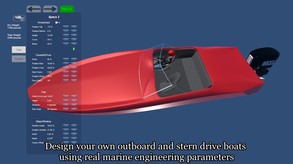
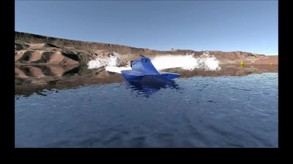
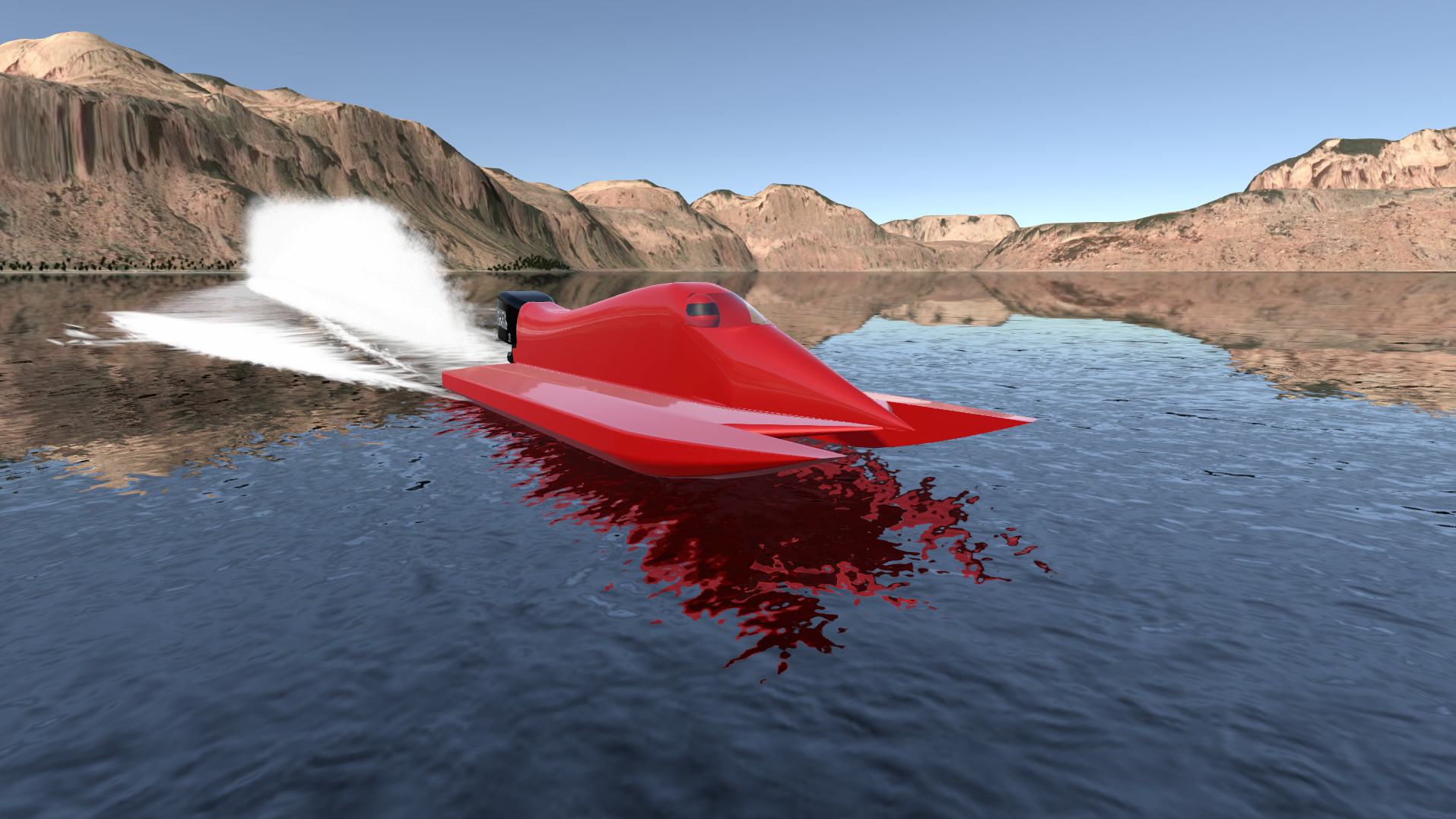
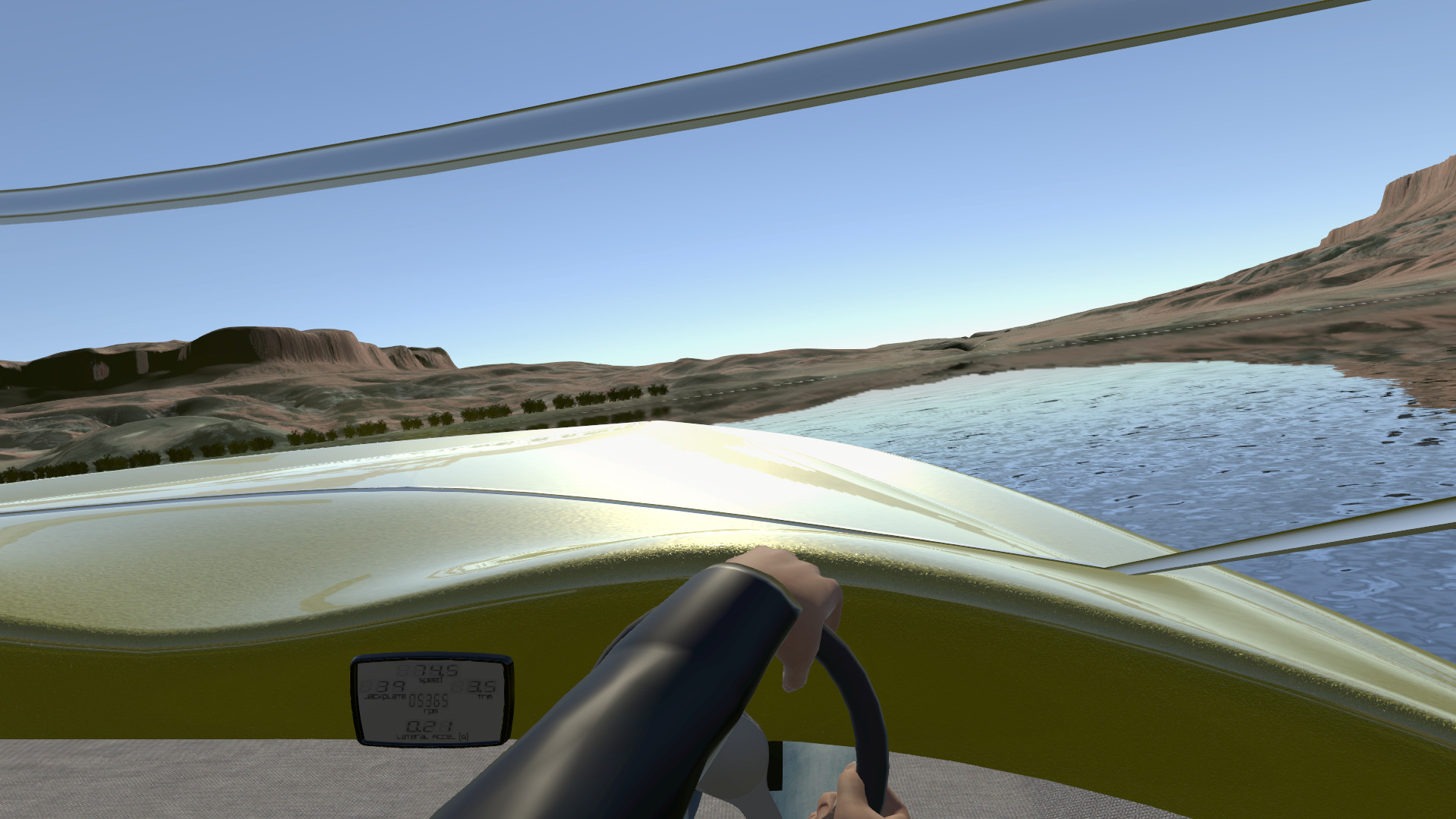
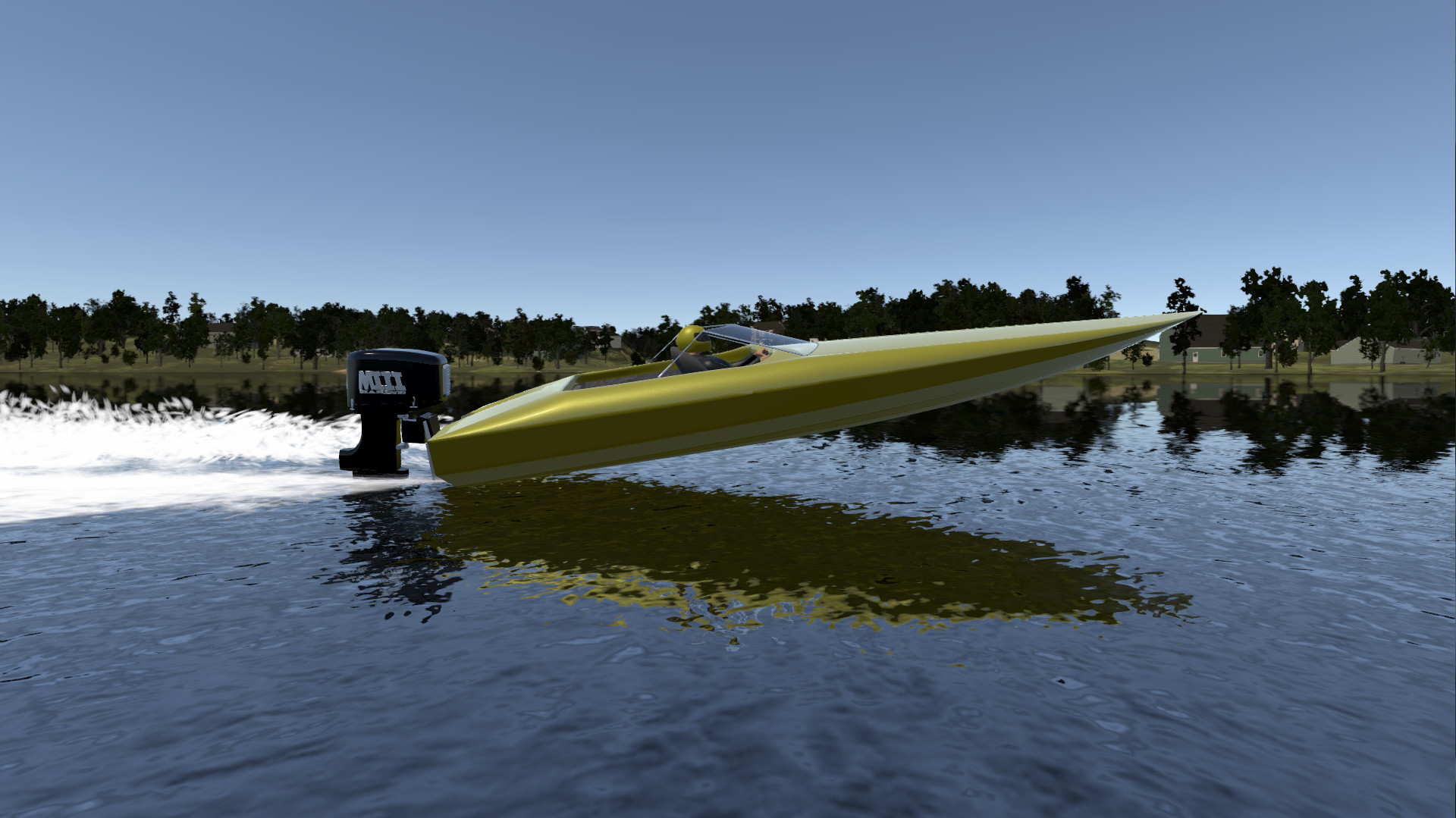
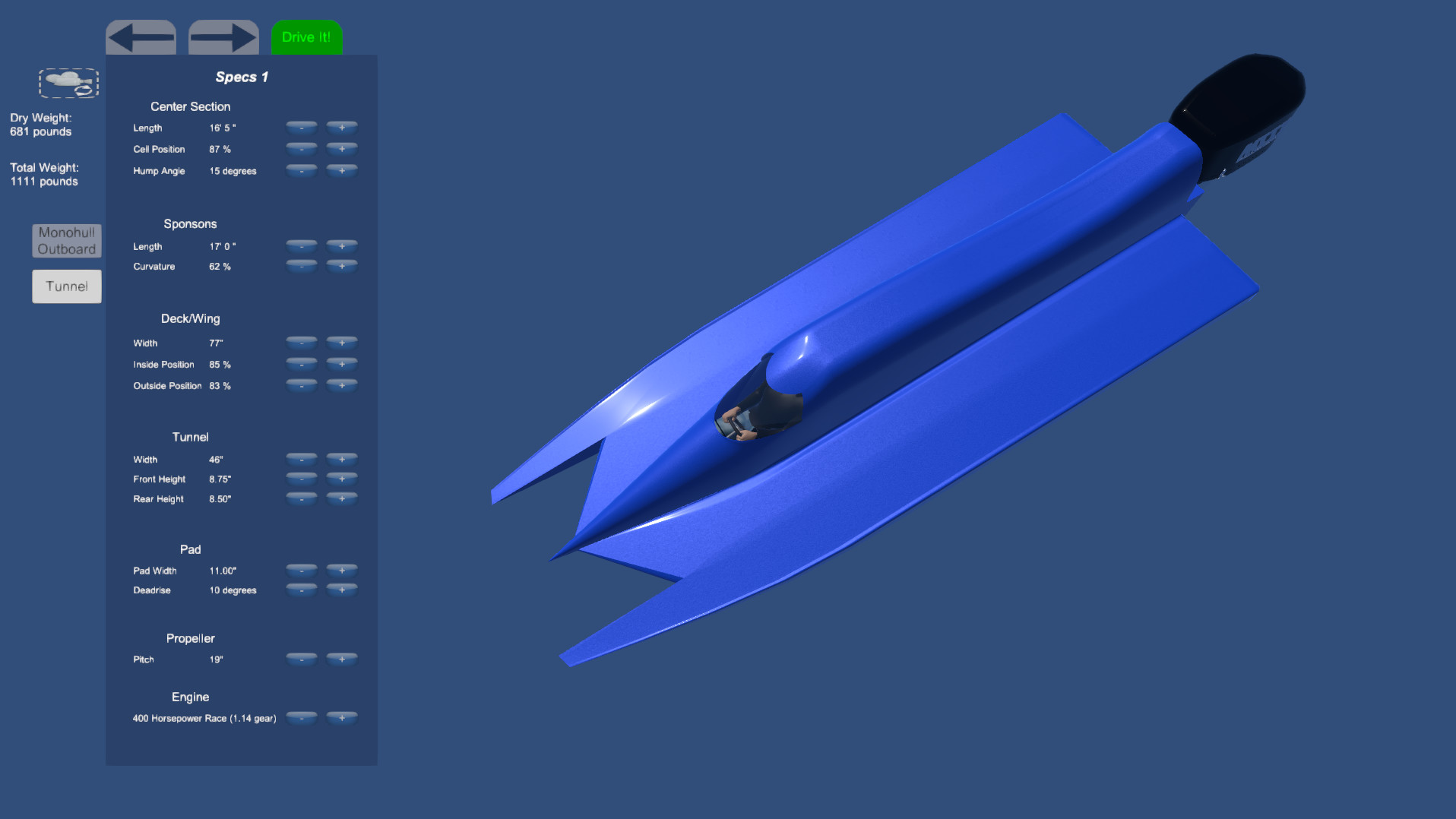
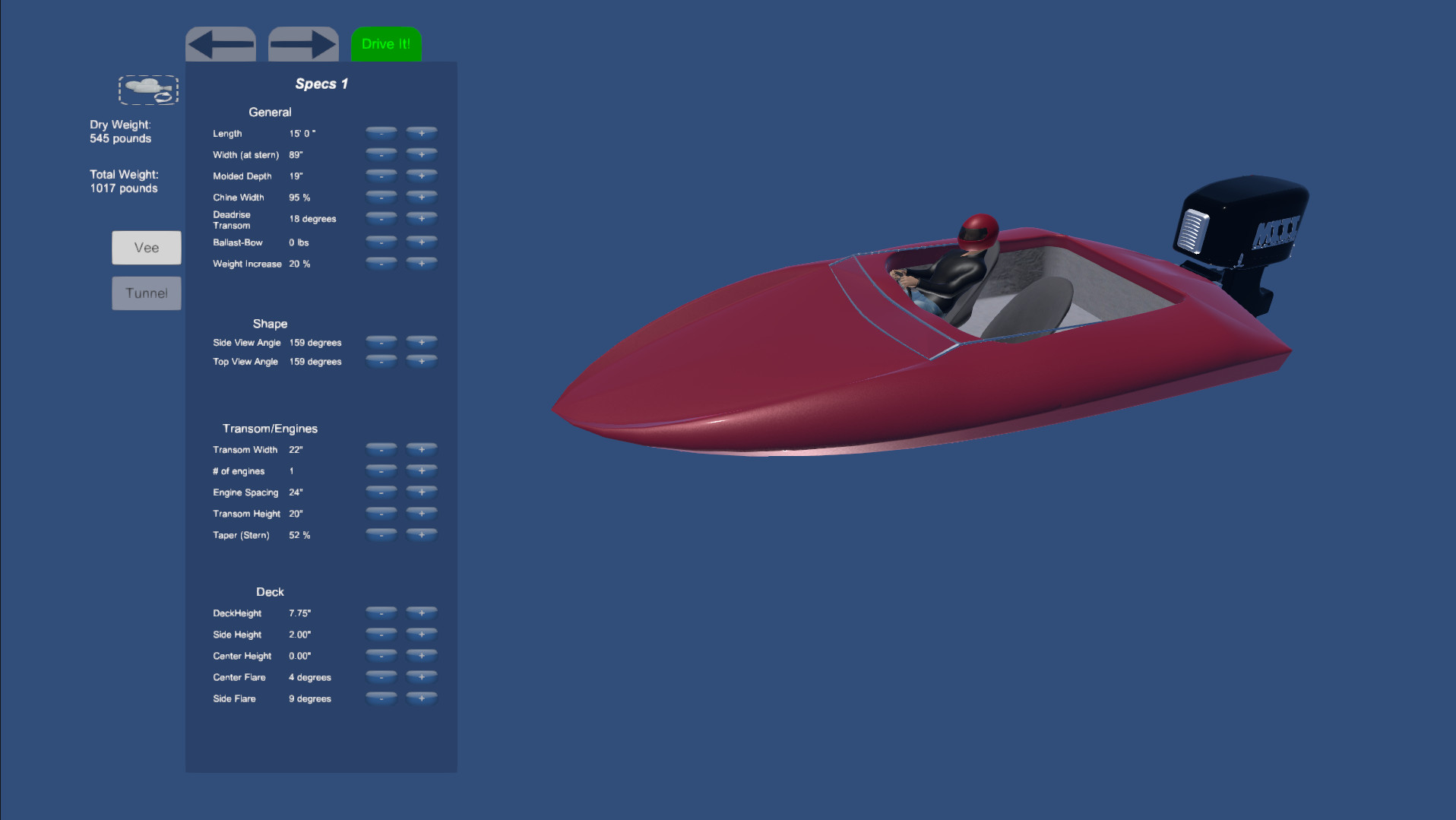
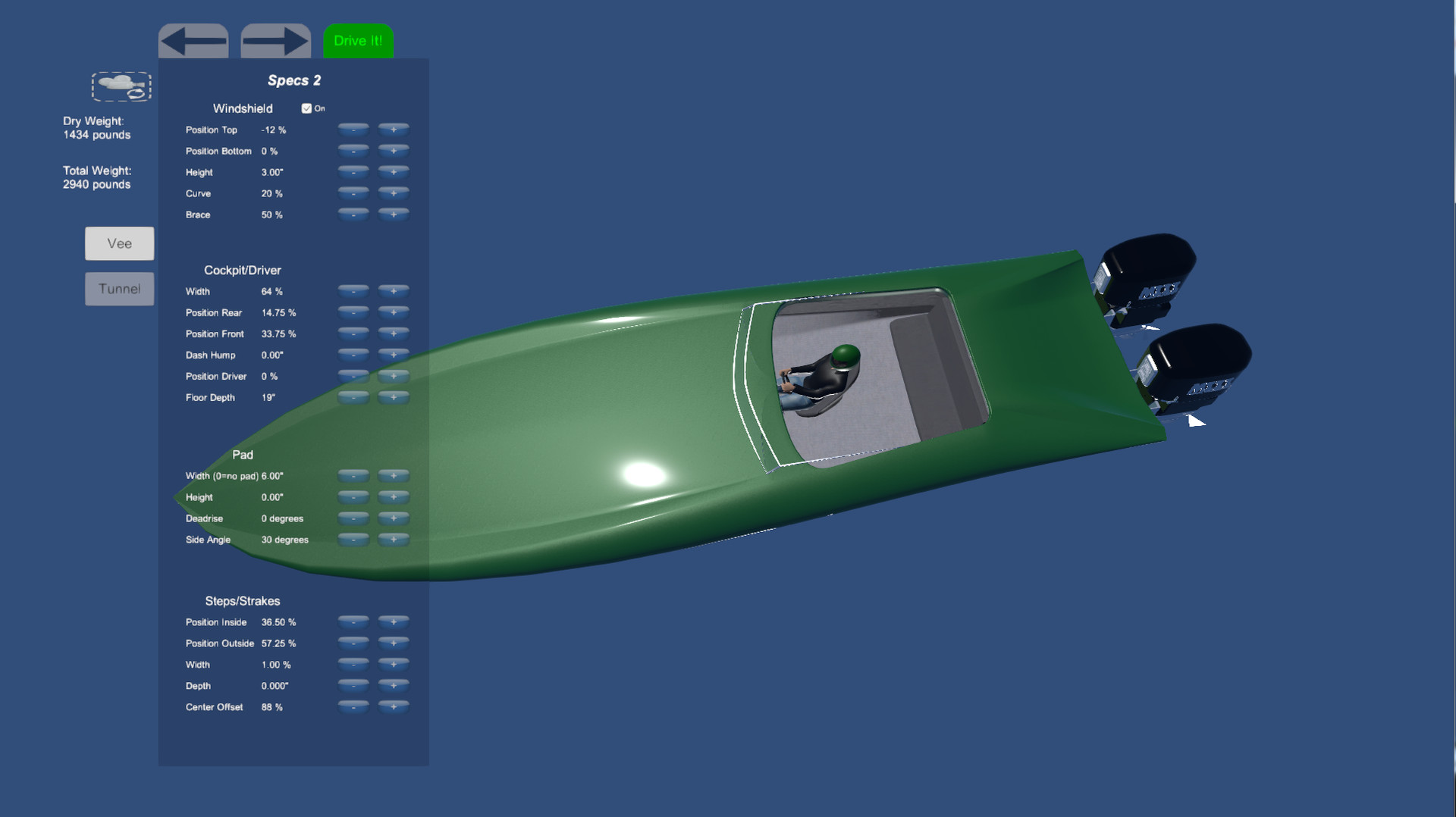
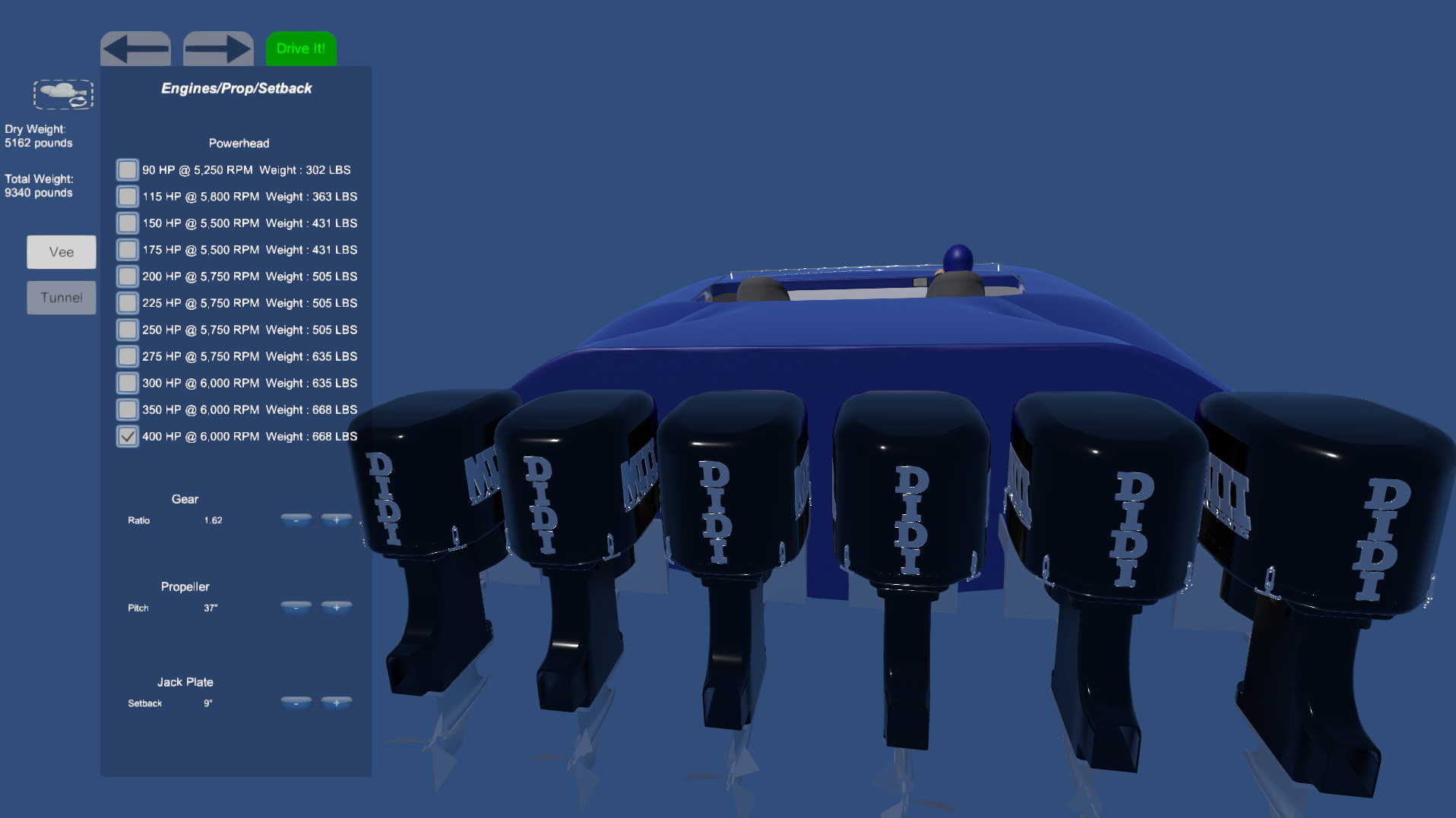
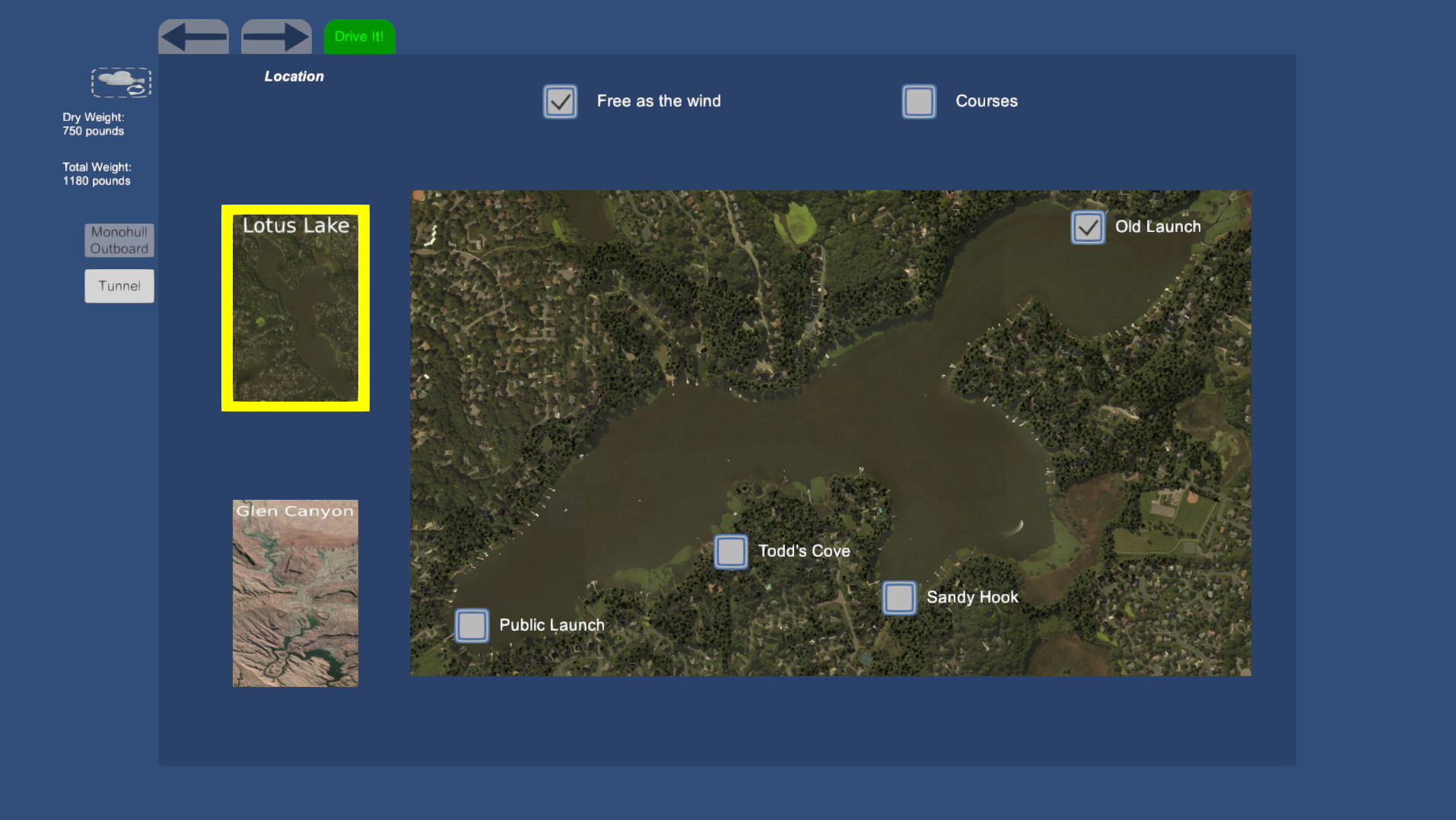
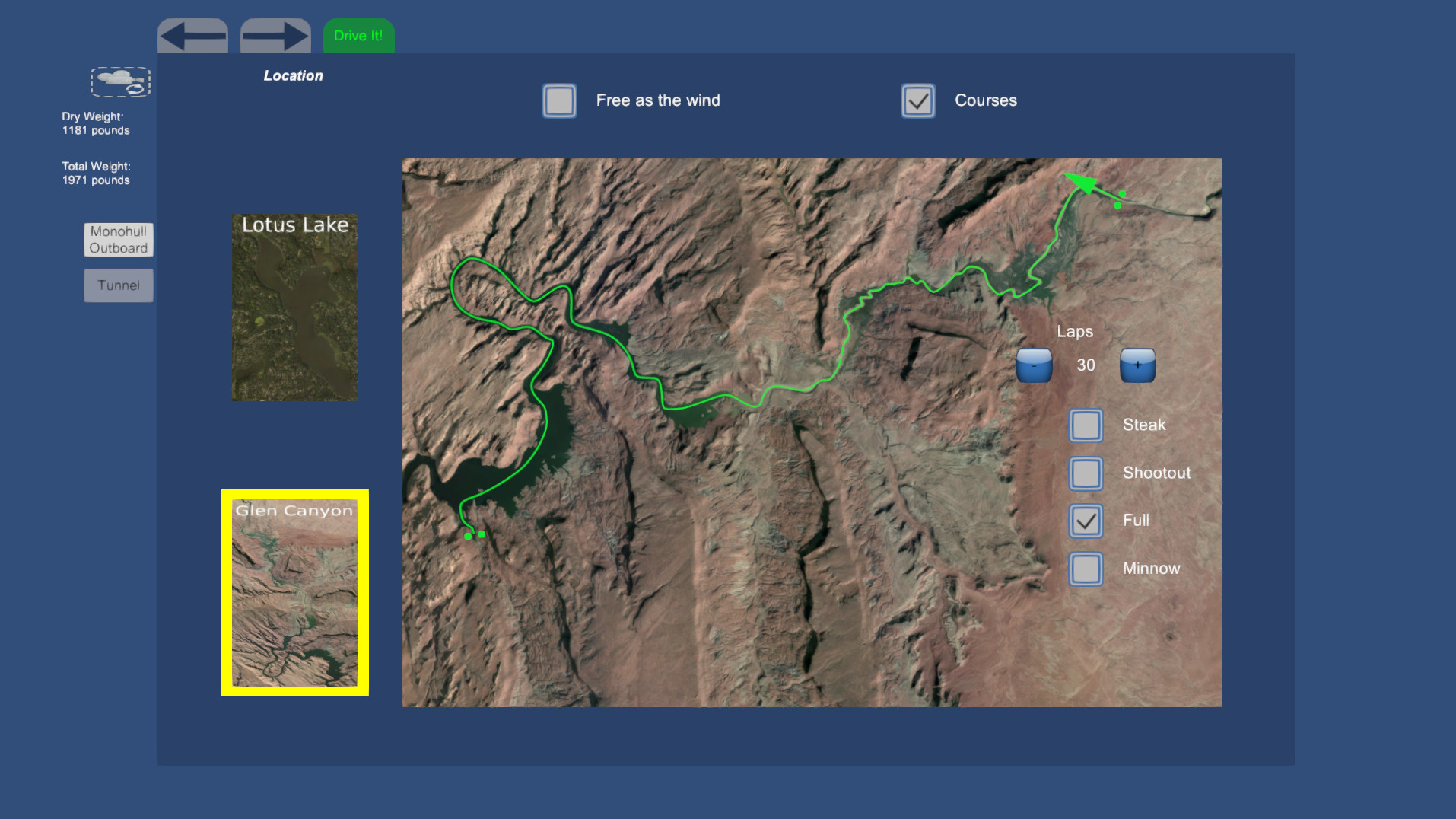
Design and drive your own speedboats with simulation quality physics including blowover/chine walk/porpoising dynamics. Popular with real life boat racers. Free drive anywhere or compete on courses through leaderboards. 40+ adjustable design parameters. Solo developer.
За 1 день наблюдений цена не менялась. Большие скидки обычно бывают на сезонных распродажах Steam.










Картинка обновляется сама: покажет живой рейтинг игры на сегодня и ведёт на эту страницу.

VEE HULLS HAVE BEEN REMADE FROM SCRATCH (released as a free update on Feb 19, 2017)
"Design it, Drive it: Speedboats" is a speedboat simulator with high fidelity physics that lets you design and drive your own speedboats from dozens of adjustable parameters on a Windows PC, then compete against other players via leaderboards in top speed shootouts, solo time trials on lapped or point to point courses, or just free drive as you please to explore the world and your design's handling characteristics with no constraints. Whether you end up with boats that are slow, fast, turn well, chine walk, or tend to blow over at high speeds or not depends on what you do with the shape and design of the hull.
This is not your typical boat game. It's more of a design tool and physics sandbox/waterbox, a serious, hardcore simulator used by real life boat racers around the world including Formula 1, 2, 3, 4, 5, offshore powerboat, and other series racers to keep their skills sharp between races and train muscle memory. Real life high performance boat driving skills such as chine walk control and engine trim management can be learned safely.
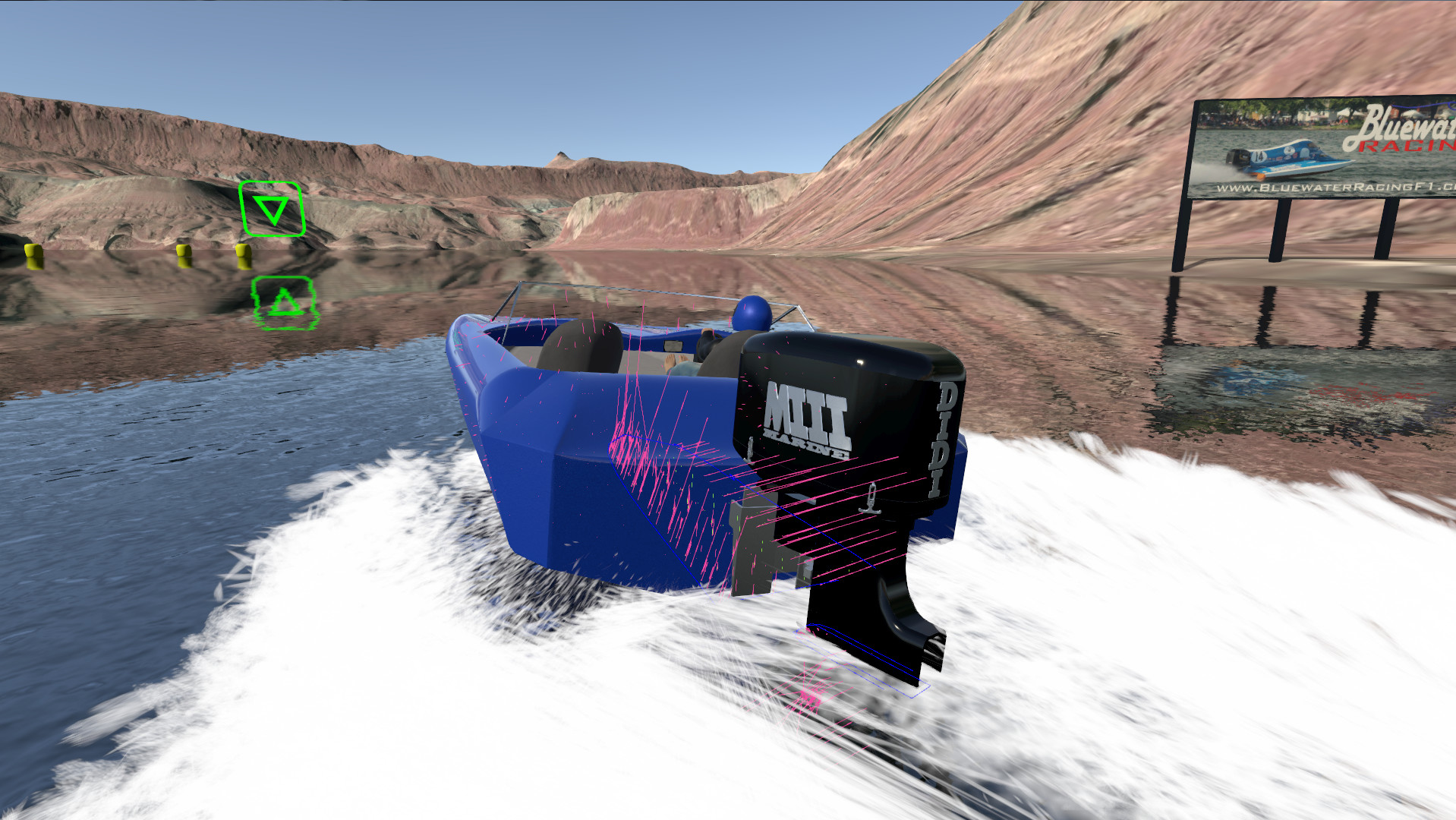
Real life marine engineers and boat designers use this to experiment with ideas and get a better intuitive feel for how various design aspects influence boat handling and performance. The force vector view (accessible with the TAB key) is useful in examining exactly why the boat does what it does (see pic in screenshots). Dynamic instabilities can be examined in real time as they're happening, and the exact water/hull wetted contact shape and size can be viewed through the hull in real time.Boat Design Variables:
Currently there are two basic hull types that can be modified to produce your custom hull designs:
• Vee bottom outboards
• Formula style outboard tunnels
The vee hulls have more than 40 adjustable parameters you can play with that affect not only the boat's appearance, but also have a significant effect on all aspects of performance and handling. Most of these can be viewed in the screenshots section of the store. The tunnel hulls are also adjustable.Physics
The boat mesh is generated procedurally (mathematically) from the design parameters you specify. The physics computations (thousands of forces) are run directly on the resulting hull geometry from your design. As a result, all adjustable parameters affect the handling and top speed of your boat in much the same way they do on real boats.
The physics code/vehicle simulation model driving all this is a proprietary system that solves thousands of hydrodynamic, skin friction, buoyancy, and aerodynamic forces separately on almost every triangle in the boat mesh, lower unit, and powerhead as well as the individual propeller blades. A force vector view (TAB key) will display many of these forces so you can see exactly why the boat chine walks, porpoises, and turns well (or not), as well as showing which area of the hull is in the water at any given instant in order to guide your design decisions and help you understand why your design behaves the way it does.
Steering wheel force feedback (if you have one, not required) is fully modelled with many of these same forces and torques.
• Chine walk naturally comes out of the model as well as blowover. A lot can be learned about both by experimenting with the hull design and driving techniques inside the boat sim. You can learn to control chine walk in a real boat by practicing it safely in the simulator first.
• Skin friction at the hull and lower unit is computed using a sophisticated Reynold's number approach that depends on the details of the water/hull interaction, so as you trim the engine or adjust the hull or pad design to raise the bow or hull out of the water with aerodynamic lift, the effect on top speed is similar to what you would get with a real boat. The same goes for the cockpit operated hydraulic jackplate which can be used to raise the entire engine up to minimize wetted drag on the lower unit to attain even higher speeds.
• Paddlewheel effects due to surface piercing propellers come out of the physics model due to the individual propeller blade modelling, so when the jack plate is raised or the engine trim is adjusted to lift the propeller partly out of the water (surface piercing prop) in the hunt for maximum speed, the lopsided propeller forces from blades exposed to the air tend to steer the boat which requires a steering correction similar to real life surfacing propellers.
Maps
These maps are real life locations generated from satellite terrain data.
• Lotus Lake in Chanhassen, Minnesota, is a small, three bay lake about one mile long that the developer grew up on and spent untold hours driving the family speedboat on.
• Glen Canyon, Utah, is an enormous stretch of the San Juan river that takes more than 30 minutes to drive the entire length of in a 100 mph+ boat. It includes a bit of everything in one giant map. There's a narrow, twisty section of…